
As a writer, I found the inspiration for my books in the pages of comics. I was captivated by the super heroics, the vibrant costumes, and, of course, the storytelling. While the narratives didn’t always make perfect sense and characters occasionally acted out of character, I chalked that up to different writers interpreting them in their own ways. Regardless, comics were a fantastic medium for storytelling.
As I grew older, I expanded my reading to novels and longer books, drawing inspiration from them as well. But I never abandoned comics—they were my gateway into the wonderful world of reading. To this day, I love books and make time for them as much as possible, with a towering to-be-read pile I can’t wait to get through. Unfortunately, comics haven’t held the same place in my life over the last 10–15 years.
The comic book industry has shifted, taken over by individuals who claim to be writers but are, in reality, activists hired by the two major comic book publishers to push agendas. While their efforts were blatant at first, they have since scaled back slightly. Yet, the activism remains, with many modern comics feeling more like storyboards for TV and movie pitches than genuine narratives.
When the activism does appear, it tends to peak around June, with rainbow-clad covers and characters redesigned to fit an ideological mold. It seems like an attempt to normalize personal agendas through beloved superheroes, often reinterpreting them to reflect the creators’ own lifestyles. Any criticism is met with loud, hostile accusations of bigotry, aiming to silence dissent rather than engage in meaningful discussion.
Let’s examine two examples of this shift in comics.

First, the latest Harley Quinn comic. Even its cover is problematic enough, and I refuse to even name it. This so-called “book” carries an April Fools’ tag at the bottom, seemingly as a defense mechanism—allowing its defenders to claim that critics simply “can’t take a joke.” The issue is that it’s not a joke. It’s another step down a perverse path, one that will inevitably be normalized and reinforced in future issues. That DC Comics greenlit such a project speaks volumes about the industry’s current state.
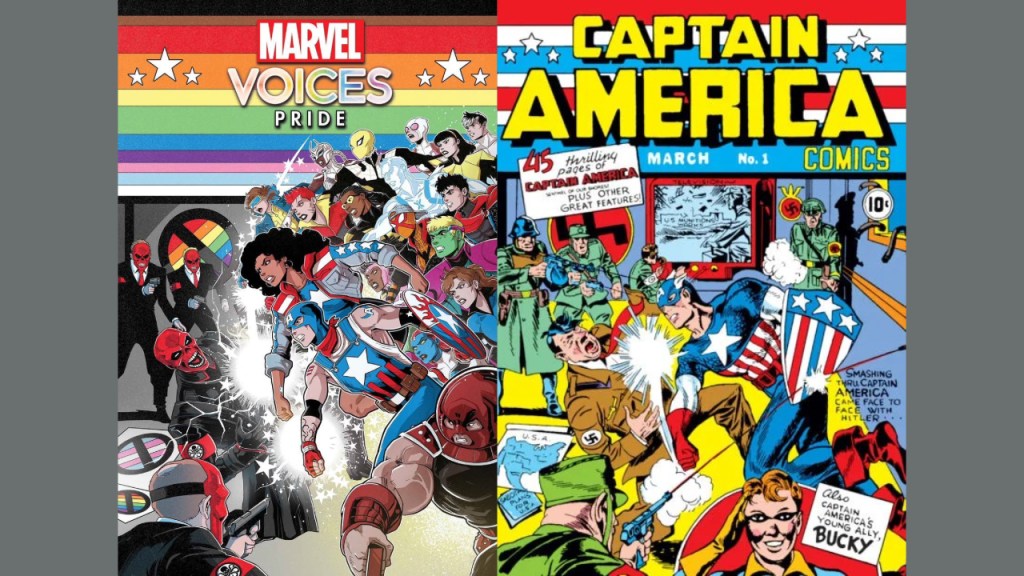
Next, there’s another comic that attempts to pay homage to Jack Kirby’s iconic cover of Captain America punching Hitler. In this version, however, the artist has crammed as many LGBTQ+ heroes as possible onto the cover, all attacking the Red Skull and similarly masked figures. Behind them, anti-LGBTQ+ symbols are visible, implying that anyone who disagrees with this lifestyle is an enemy—perhaps even a Nazi. This tells me that the creators at Marvel Comics have made their stance clear: they aren’t interested in readers who hold differing views. Even as their company hemorrhages money, they remain committed to ideological virtue signaling rather than storytelling.
Comics have always contained political elements, dating back to their earliest days. But in the past, writers didn’t force-feed agendas to readers. They presented dilemmas and ideas, allowing the audience to form their own opinions. Writers respected their readers’ intelligence and avoided talking down to them. Today’s activist-driven approach, however, assumes readers need to be corrected, lectured, and re-educated to embrace the “right” way of thinking.
Times change, and I’m not suggesting that comics should be frozen in the past. But they should remain true to their essence: stories about heroes overcoming villains, triumphing against impossible odds, and inspiring readers to do the same in their own lives. Comics should ignite imagination, not scold readers for misgendering a character or failing to adhere to the latest ideological trends.
This is a call to all indie creators, regardless of your medium—don’t give up. Keep creating. It may feel like an uphill battle, but somewhere, someone appreciates your work and wants more. Don’t let them down. Keep going. Keep making. The future of storytelling depends on it!
 stephenhudler.com
Leave a comment